
Written with the help of artificial-intelligence tools and checked by automated controls.
A men's draw more open than expected
The 2026 US Open begins in a rare context: the men's tournament does not look like a simple continuation of the recent hierarchy. The withdrawal of Jannik Sinner, the world number one, removed one of the circuit's most solid reference points from the draw. Carlos Alcaraz, the defending champion, returns after four months out with a wrist injury. Novak Djokovic, still pursuing a 25th major title, arrives with his experience intact but also the physical questions that come with being 39. Alexander Zverev, placed right at the top of the draw, carries the status of the man to beat without the tournament seeming locked up.
At 22, the Frenchman is no longer being presented merely as a prospect.
A generation that no longer has merely the role of opposition is rushing into this opening. Ben Shelton, Taylor Fritz, Arthur Fery, Rafael Jodar, Federico Cina and Rei Sakamoto each tell a different story, but they all contribute to the same impression: the men's circuit is going through a phase in which the favorites still exist, without completely dominating the landscape.
Fils arrives with a title that changes his status
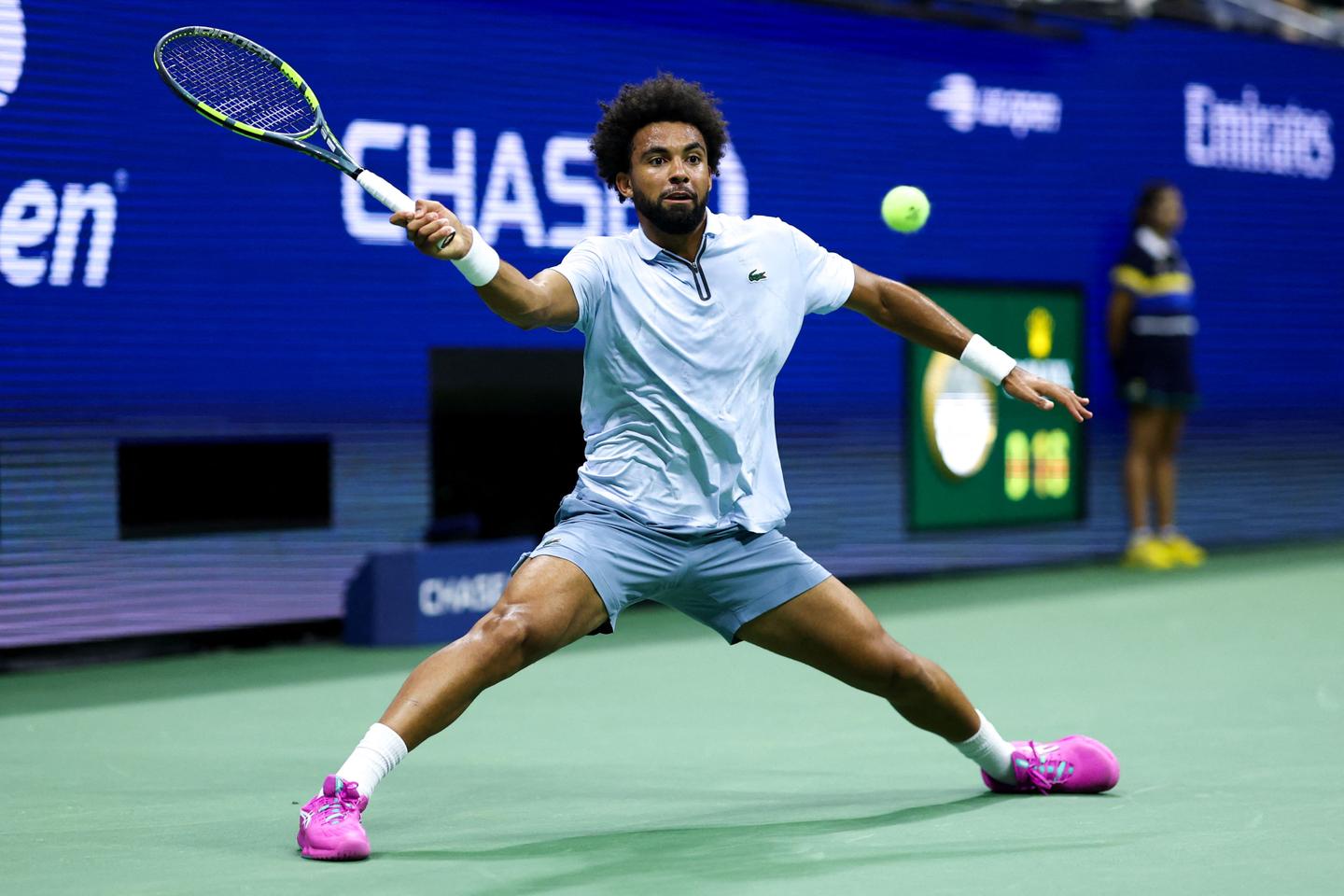
Arthur Fils is one of those whose sporting standing has changed abruptly. His Masters 1000 title in Cincinnati, won against Frances Tiafoe, gives him new legitimacy ahead of New York. This is not merely another line on his record: it is proof that he can string together wins against very high-level players, handle a high-pressure final and respond after months hampered by injuries.
At 22, the Frenchman is no longer being presented merely as a prospect. His serve, forehand power and ability to impose a high tempo on hard courts give him credible weapons in a tournament where several leading names arrive with question marks. Caution is still necessary: Fils has not yet built a major deep Grand Slam run, and the US Open rewards mental consistency as much as peaks of performance. But his August momentum now places him among the players capable of damaging a draw.
The veterans still carry the burden of proof
The new does not mean the old order is fading away. Djokovic remains a case apart. Even when he lacks match play, he retains a unique ability to turn a major tournament into a contest of endurance and precision. Zverev arrives with a status strengthened by his French Open triumph, while Alcaraz, if he quickly rediscovers his feel, remains one of the most difficult players to contain over five sets.
But the psychological gap has narrowed. Young players are no longer showing up merely to learn. Shelton can rely on his energy and serve, Fritz on his American experience, Jodar on his rapid rise, and Fery on the momentum of Wimbledon. The qualifiers also produced signs, with very young profiles entering the main draw, such as Sakamoto and Cina. This is not yet a collective seizure of power, but it is diffuse pressure on the seeds.
New York as a proving ground
The tournament will show whether this sense of openness leads to a genuine shift. Fils, in particular, must confirm that Cincinnati was not an isolated peak but the beginning of a new standing. His challenge will be to remain aggressive without overdoing it, protect his body and accept the less polished matches that are common in New York's heat and noise.
The US Open therefore arrives as a proving ground rather than merely a late-summer showcase. The established champions still have the titles, the credentials and the authority. The challengers, meanwhile, have freshness, momentum and fewer inhibitions. For Fils, this fortnight could become an important turning point: the moment when a French prospect stops being a curiosity in the draw and becomes a concrete problem for everyone.